
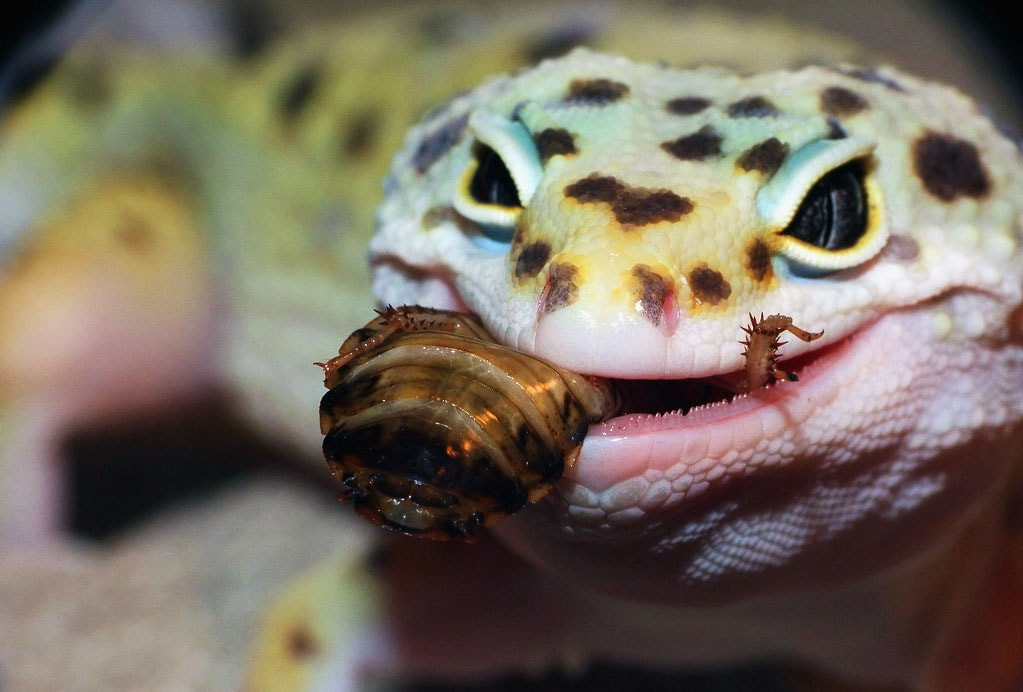
Dubia Roaches for Leopard Geckos: Feeding Amounts, Sizing, and Why Keepers Switch
Posted by The Fluker's Team on Sep 9th 2026
Dubia roaches have become one of the most popular feeder insects for leopard geckos, and they offer several practical advantages for both keepers and geckos. They are high in protein, easy to gut-load, quiet, and they cannot climb smooth surfaces or jump, which makes them far less of a hassle than crickets. If you keep a leopard gecko, dubia roaches deserve a spot in the feeding rotation. This guide covers correct sizing, how many to feed by age, gut-loading and dusting, and how dubia stack up against crickets.
Why Dubia Roaches Are Great for Leopard Geckos
Leopard geckos are insectivores that thrive on a varied diet of appropriately sized live prey. Dubia roaches (Blaptica dubia) check several boxes:
-
- Good protein content and a relatively soft-bodied nymph, making them a practical feeder that is easy to digest for leopard geckos.
- No climbing or flying, so escapees do not scale your enclosure walls
- Much quieter and generally less odorous than cricket colonies.
- Long-lived and easy to keep, so a colony or a tub of feeders lasts
- Readily gut-loaded, letting you pass nutrition straight to your gecko
These traits are why so many keepers describe switching from crickets to dubia as a quality-of-life upgrade for both the keeper and the gecko.
Correct Dubia Roach Size for Leopard Geckos
Sizing is the most important rule in feeding any reptile: never offer prey wider than the space between the animal's eyes. Feeding prey that is too large can increase the risk of choking or digestive complications.
-
- Hatchling and juvenile geckos: small dubia roaches, roughly 1/4 to 3/8 inch
- Adult leopard geckos: medium dubia roaches, around 1/2 to 5/8 inch
When in doubt, size down. A slightly small feeder is always safer than one that is too big.
How Many Dubia Roaches to Feed
Feeding amount and frequency change with age.
-
- Juveniles (under about a year): feed daily. Offer as many appropriately sized dubia as the gecko will eat in 10 to 15 minutes, often around 5 to 8 small roaches per feeding.
- Adults: feed every other day or a few times a week. A typical adult eats roughly 2 to 4 medium roaches per feeding.
A helpful guideline is the two-insects-per-inch-of-body-length rule for a feeding. Always watch body condition: a healthy leopard gecko has a plump, not bulbous, tail. Adjust portions if your gecko is gaining or losing weight.
Gut-Loading and Dusting Dubia Roaches
Gut-loading and appropriate supplementation help correct nutritional gaps in feeder insects and make them a more appropriate part of a balanced diet.
Gut-loading: feed your dubia roaches a nutritious diet for 24 to 48 hours before offering them. Fresh vegetables, leafy greens, and a quality commercial gut-load diet work well. The goal of gut-loading is to improve the nutritional value of the feeder before it is offered to the gecko.
Dusting: like most feeders, dubia have an unfavorable calcium-to-phosphorus ratio, so dust them with supplements. A common schedule is to lightly dust feeder insects with an appropriate calcium supplement according to the product's directions and your gecko's UVB setup. A multivitamin supplement may also be needed periodically. Following standard reptile nutrition guidance such as the care references compiled by the Association of Reptilian and Amphibian Veterinarians (ARAV) helps prevent metabolic bone disease, one of the most common and preventable health problems in captive leopard geckos.
Dubia Roaches vs. Crickets
Both are good staples, but they differ:
-
- Dubia are higher in protein per feeder, longer-lived, quiet, odorless, and cannot climb or jump.
- Crickets are widely available, trigger a strong hunting response, and are inexpensive, but they are noisy, smelly, short-lived, and prone to escaping.
Many keepers run both for dietary variety, which is ideal since a varied diet best mimics what a gecko would eat in the wild. If you feed crickets too, our live crickets page covers sizing and gut-loading.
Feeding Tips for Success
-
- Feed in the evening, when leopard geckos are naturally active
- Use a shallow dish or feed by tongs to reduce roaches hiding in the substrate
- Remove any uneaten insects so they do not stress or nibble the gecko
- Keep a shallow dish of plain calcium available for self-supplementation
- Provide a warm side around 88 to 92 degrees Fahrenheit so the gecko can properly digest
FAQ
What size dubia roaches do leopard geckos need?
Match the roach to the gecko: about 1/4 to 3/8 inch for juveniles and 1/2 to 5/8 inch for adults. Never feed prey wider than the space between the gecko's eyes.
How many dubia roaches should I feed my leopard gecko?
Juveniles eat daily, around 5 to 8 small roaches per session; adults eat 2 to 4 medium roaches every other day. Adjust based on body and tail condition.
Are dubia roaches better than crickets for leopard geckos?
They have advantages: more protein per feeder, no climbing or jumping, quiet, odorless, and longer-lived. Many keepers feed both for variety.
Do I need to gut-load and dust dubia roaches?
Yes. Gut-load for 24 to 48 hours and dust with calcium and a multivitamin on a regular schedule to prevent metabolic bone disease.
Can leopard geckos eat only dubia roaches?
Dubia roaches can make up a substantial portion of a leopard gecko's feeder rotation, but variety is preferable. Rotate dubias with other appropriately sized insects such as crickets, mealworms, black soldier fly larvae, or silkworms.
The Bottom Line
Dubia roaches are a clean, high-protein, low-hassle staple for leopard geckos. Size them to your gecko, feed to age and body condition, and always gut-load and dust to keep nutrition complete. Ready to stock your feeders? Shop Fluker Farms' dubia roaches and explore care guidance in our reptile care sheets, backed by insect-rearing expertise since 1953.