
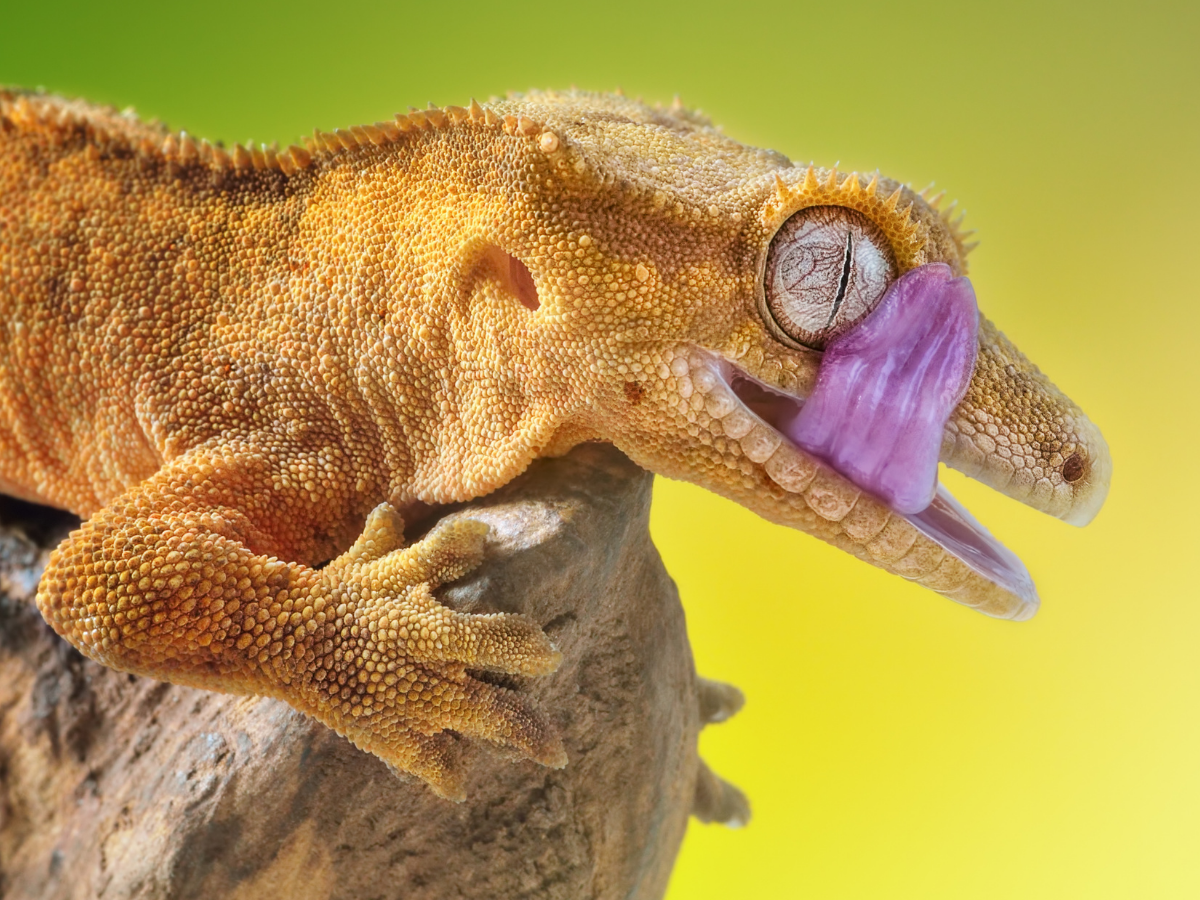
Crested Gecko Diet: The Complete Feeding Guide for Healthy, Long-Lived Geckos
Posted by The Fluker's Team on Sep 5th 2026
The crested gecko (Correlophus ciliatus) is one of the easiest reptiles to keep — partly because the modern crested gecko diet is one of the most refined in herpetoculture. Commercial Meal Replacement Powders (MRPs) have made nutrition genuinely simple, but "easy" does not mean "thoughtless." Geckos kept on the wrong food, the wrong supplement schedule, or the wrong insect rotation may develop calcium deficiency, soft jaw, and a list of preventable problems that show up months after the mistake.
This guide is a complete diet roadmap: what crested geckos eat in the wild, how the commercial MRPs replicate that, when to add live insect feeders, supplementation, feeding schedules by life stage, and the mistakes that account for almost all diet-related health problems.
What Crested Geckos Eat in the Wild
Crested geckos are native to the southern part of Grande Terre, New Caledonia, a Pacific island ecosystem. Wild diet studies found that wild crested geckos are frugivorous omnivores. They eat:
-
- Ripe and overripe fruit pulp (especially fallen fig, papaya, and native island fruits)
- Nectar and pollen from flowering trees
- Small insects: moths, beetles, crickets, soft-bodied larvae
- Occasionally other invertebrates and tree sap
Approximately 70 – 80% of their wild calorie intake comes from fruit and nectar, with 20 – 30% from insects. Modern captive husbandry mirrors this ratio.
Commercial Meal Replacement Powders (MRPs) Are the Foundation
The single biggest advance in crested gecko husbandry was the development of complete powdered diets that mix with water into a fruit-pulp consistency. The major brands all hit the same targets:
18 – 22% crude protein
-
-
-
- 6 – 10% fat
- Calcium-to-phosphorus ratio 2:1 or better
- Vitamin D3 included
- Fruit pulp base for palatability
-
-
Used alone, MRP is a complete diet for crested geckos. Common brands include:
-
-
-
- Pangea — Multiple flavors; widely available
- Repashy Crested Gecko MRP — Industry baseline; very long track record
- Black Panther Zoological — Newer, more flavor variety
- Leapin' Leachies — Boutique brand favored by some breeders
-
-
Rotate two or three brands. Geckos develop strong preferences and a brand-loyal animal that suddenly refuses MRP because the formula changed slightly is a common problem. Variety prevents it.
How to mix and serve MRP
Mix at the manufacturer-specified ratio (typically 1 part MRP : 2 parts water by volume). Serve in shallow dishes (plastic bottle caps work well) and replace nightly. Because MRP contains fruit ingredients and moisture, uneaten food can spoil and should be replaced daily.
Insect Feeders: The 20% Supplement
While MRP alone is complete, most experienced breeders supplement with live insects 1 – 2 times per week. Insects deliver:
-
-
-
- Enrichment (hunting behavior keeps geckos active and lean)
- Higher protein for breeding females and growing juveniles
- Variety in amino acid profiles
-
-
The best insect feeders for crested geckos:
Crickets (1/4 – 1/2 inch)
The classic crested gecko feeder. Right-sized for adult cresteds, easy to gut-load, accepted enthusiastically. Use small to medium crickets; pinheads are too small and adults are too large.
Small dubia roach nymphs (1/4 – 1/2 inch)
Quieter than crickets, longer-lived, and increasingly common in crested colonies. Same sizing rules.
Black soldier fly larvae
High calcium (5%) makes BSFL the closest thing to a self-supplementing feeder. Excellent for breeding females.
Small mealworms (occasional)
Mealworms are higher in chitin than many other feeder insects and have a less favorable calcium-to-phosphorus ratio, making them better suited as an occasional treat than a staple feeder.
What to avoid
-
-
-
- Wild-caught insects — pesticide and parasite risk
- Fireflies — toxic to reptiles
- Adult superworms — too large, biting risk
- Pinhead crickets in dusty bins — respiratory irritant
-
-
Feeding Schedule by Life Stage
Hatchlings (0 – 4 months, under 5 grams)
-
-
-
- MRP nightly, fresh every evening
- Insects: 2 – 3 small crickets twice weekly (pinheads to 1/4 inch)
- Calcium dust on insects (without D3 if MRP brand contains adequate D3)
-
-
Juveniles (4 – 12 months, 5 – 25 grams)
-
-
-
- MRP every 2 – 3 nights
- Insects: 3 – 5 appropriately sized crickets twice weekly
- Calcium dust on insects
-
-
Adults (12+ months, 25 – 60 grams)
-
-
-
- MRP 2 – 3 nights per week
- Insects: 5 – 8 crickets once weekly
- Breeding females: MRP nightly + insects twice weekly to support egg production
-
-
Geckos eat at night. Feed in the evening as the lights dim.
Supplementation: The Critical Layer
MRP brands disagree on whether you need additional calcium and D3 dusting on feeder insects. The honest answer: it depends on the gecko's MRP intake. If a gecko consistently eats its MRP nightly, no additional supplementation is required. If a gecko eats MRP intermittently and you supplement with more insect feedings, dust feeders with calcium with D3 once weekly and with plain calcium at other feedings.
For breeding females, calcium demands are higher. Always offer a calcium dish (powdered cuttlebone or commercial calcium without D3) in the enclosure year-round for breeding-aged females.
What Crested Geckos Should NOT Eat
-
-
-
- Insects as the sole diet — Crested geckos will eat insects exclusively if offered, but this causes calcium deficiency and metabolic bone disease within months
- Baby food fruit purees — The internet myth that won't die. Inadequate protein and calcium, high sugar.
- Whole fruit pieces — Most cresteds will not eat them, and chunks become rotting hazards
- Wax worms more than rarely — Far too fatty; addictive (geckos refuse other food)
-
-
Common Diet Mistakes That Cause Problems
-
-
-
- Old MRP in the enclosure for multiple days — bacterial growth, refused feedings, GI upset
- Feeding only crickets and skipping MRP — calcium deficiency, soft jaw, and can lead to metabolic bone disease.
- Oversized insects — impaction; follow the eye-width rule (insect no wider than the gecko's eye gap)
- No water dish — some geckos drink from misting alone, but always offer a shallow water dish
- Skipping calcium dust on feeder insects — even with a complete MRP, dust is cheap insurance
-
-
For authoritative reference, the Merck Veterinary Manual reptile nutrition section and the ARAV care guidelines review crested gecko husbandry thoroughly.
Frequently Asked Questions
What is the best food for a crested gecko? A complete commercial MRP (Pangea, Repashy, Black Panther, or similar) as the foundation, with appropriately-sized live insects once or twice weekly for enrichment and variety.
Can crested geckos live on MRP alone? Yes — modern MRPs are complete diets. Insects add enrichment and protein but are not strictly required.
How often should I feed my crested gecko? Hatchlings nightly, juveniles every 2 – 3 nights, adults 2 – 3 nights per week. Insects supplement once or twice weekly.
What insects can crested geckos eat? Small crickets, small dubia nymphs, black soldier fly larvae, and occasional small mealworms. Avoid wax worms as a staple.
Do crested geckos need calcium supplementation? If feeding insects, yes — dust with calcium (with D3 once weekly, plain calcium at other feedings). MRP-only diets are usually sufficient on their own.
Bottom Line
A modern crested gecko diet is the simplest, most refined feeding program in herpetoculture: a complete MRP foundation, live insect supplementation once or twice weekly, calcium dust where appropriate, and rotation between two or three MRP brands to keep finicky geckos eating. Get those four elements right and you have a long-lived, healthy gecko.
Stock up on the insect side of the equation with live crickets from Fluker Farms — the right size for crested geckos, raised in Louisiana since 1953 and shipped same day.