
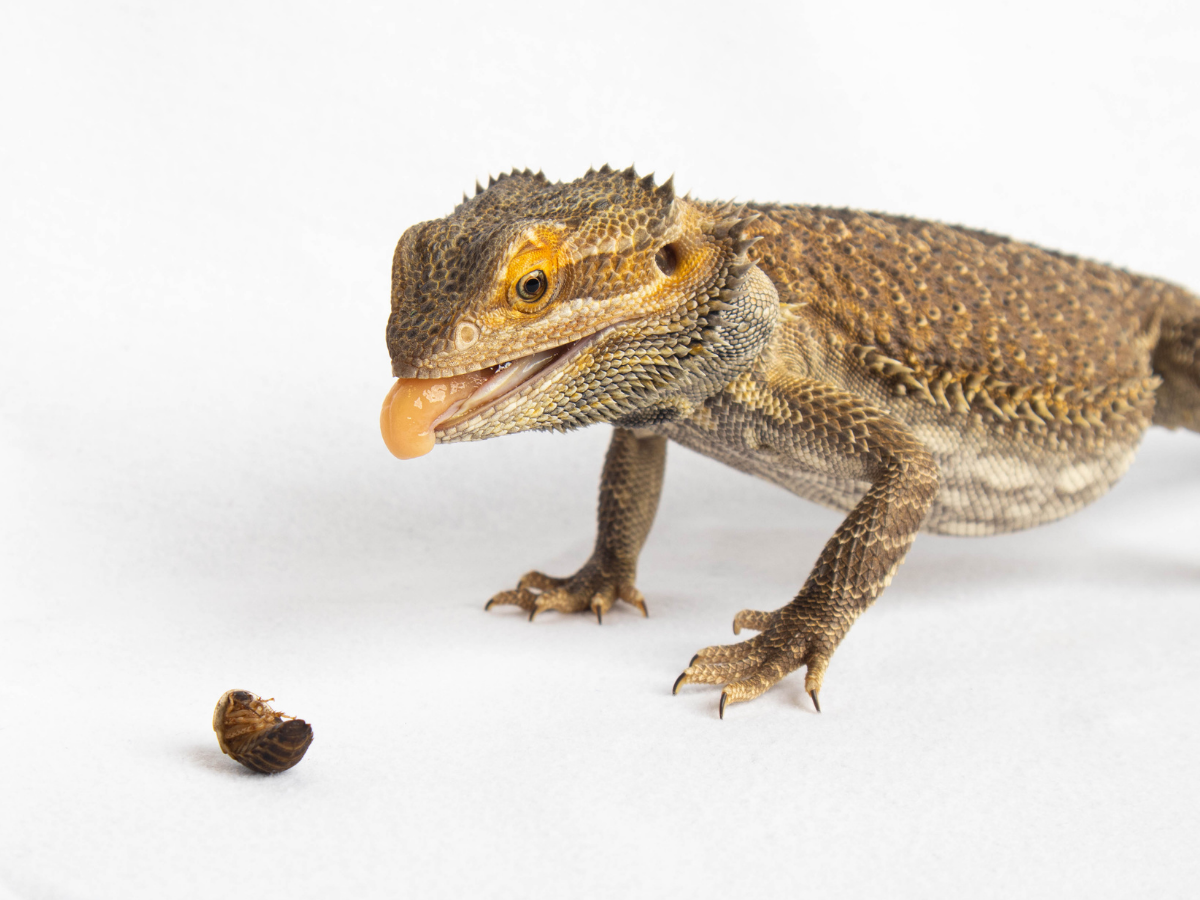
Dubia Roaches for Bearded Dragons: Feeding Amounts, Sizing, and Why Breeders Switched
Posted by The Fluker's Team on Aug 19th 2026
If you have spent any time in bearded dragon forums in the last few years, you have noticed something: the experienced keepers and breeders have almost all moved from crickets to dubia roaches as their primary feeder. The reasons are simple: cleaner colonies, longer shelf life, better nutrient profile, less escape stress, and they hold up under scrutiny. This guide covers exactly how many dubia roaches to feed a bearded dragon at each life stage, sizing the roaches to the dragon, gut-loading them properly, and the small handful of mistakes that cause most feeding problems.
Fluker Farms has been raising feeder insects in Louisiana since 1956. We breed dubia roaches, crickets, and the rest of the bearded dragon feeder lineup on the same property, so we have a clear, unconflicted view of where each insect fits.
Why Dubia Roaches Outperform Crickets for Bearded Dragons
Dubia roaches (Blaptica dubia) are a tropical, slow-moving, quiet, non-climbing cockroach native to Central and South America. Compared to crickets:
|
Factor |
Dubia Roaches |
Crickets |
|
Protein (dry basis) |
~36% |
~21% |
|
Fat |
~7% |
~7% |
|
Chitin (digestibility marker) |
Lower |
Higher |
|
Calcium:phosphorus ratio |
~1:3 |
~1:9 |
|
Lifespan in colony |
1 – 1.5 years |
6 – 8 weeks |
|
Noise |
Silent |
Chirping (males) |
|
Escape behavior |
Cannot climb smooth surfaces |
Excellent climbers and jumpers |
|
Smell |
Minimal |
Strong |
Nutritionally, dubias deliver more usable protein per gram and a meaningfully better calcium-to-phosphorus ratio. Dubia exoskeletons are softer and easier on the bearded dragon digestive system, especially for juveniles whose gut motility is still developing. Practically, dubia colonies smell less, escape less, and outlive crickets by months.
None of this means crickets are bad. Live crickets remain an excellent feeder and a smart rotation insect. But for a primary daily feeder, dubias have earned the spot for most experienced keepers.
How Many Dubia Roaches to Feed a Bearded Dragon
Feeding amount depends on age. Use this framework:
Hatchlings (0 – 3 months)
-
- Size: 1/4 inch dubia (small nymphs)
- Feeding frequency: 3 times daily
- Quantity per feeding: 10 – 25 roaches per session, as many as the dragon will eat in 10 – 15 minutes
- Total per day: 30 – 60 dubias
Juveniles (3 – 8 months)
-
- Size: 3/8 to 1/2 inch dubia
- Feeding frequency: 2 times daily
- Quantity per feeding: 15 – 30 roaches in 10 – 15 minutes
- Total per day: 30 – 60 dubias
Sub-adults (8 – 12 months)
-
- Size: 1/2 to 3/4 inch dubia
- Feeding frequency: Once daily
- Quantity per feeding: 20 – 40 in 10 – 15 minutes
- Greens: Should now be the larger portion of the diet
Adults (12+ months)
-
- Size: 3/4 inch to 1 inch dubia (adult roaches)
- Feeding frequency: 3 – 4 times per week (not daily — obesity is real)
- Quantity per feeding: 5 – 10 adult dubias per session
- Greens: Should make up roughly 75% of the diet
These numbers track the standard guidance you'll see from ARAV (Association of Reptile and Amphibian Veterinarians) and major university herpetology programs. The key principle is the 10 – 15 minute rule: feed as many appropriately sized insects as the dragon will eat in that window, then stop. Excess insects left in the enclosure can stress the dragon, especially overnight.
Sizing Dubia Roaches to Your Dragon
Follow the eye-width rule: feeder insects should be no larger than the width between the dragon's eyes. Oversized feeders are the leading cause of impaction in juvenile dragons.
|
Dragon length |
Recommended dubia size |
|
Under 4 inches (hatchling) |
1/4 inch nymph |
|
4 – 8 inches |
3/8 inch nymph |
|
8 – 12 inches |
1/2 inch nymph |
|
12 – 16 inches |
5/8 to 3/4 inch |
|
16+ inches (adult) |
3/4 to 1 inch (adult) |
Fluker Farms ships dubia roaches in clearly labeled size categories. See the dubia roach page for current stock and sizing.
Gut-Loading Dubia Roaches Before Feeding
A dubia is only as nutritious as what is in its digestive tract when your dragon eats it. Gut-load for at least 24 hours, ideally 48, before feeding.
Good gut-load foods:
-
- Dark leafy greens — collard, mustard, turnip, dandelion
- Squash and sweet potato — vitamin A
- Carrots — beta-carotene
- Apple slices and oranges — moisture and vitamin C
- Commercial gut-load (such as Fluker's Orange Cube) — calcium-fortified
Avoid: cabbage, broccoli, spinach (oxalic acid binds calcium), iceberg lettuce (nutritionally empty).
Dust dubias with calcium powder (without D3 for daily feedings, with D3 twice weekly) immediately before offering to the dragon. The combination of gut-loading and dusting closes the calcium-to-phosphorus gap that all feeder insects share.
Storing a Working Supply of Dubias
A major advantage of dubia roaches is shelf life. Kept properly, a shipment can last months:
-
- Container: Plastic tub with smooth sides
- Temperature: 75 – 85°F (cooler slows growth; warmer accelerates it)
- Humidity: 40 – 60%, achieved with a water-crystal source rather than open water
- Substrate: Egg crates stacked vertically for surface area
- Food: Dry chick starter or commercial roach chow, with fresh greens every 2 – 3 days
A tub of 250 dubias will feed a juvenile bearded dragon for about a month if you are not breeding them. A colony of 500+ adults will sustain a single dragon indefinitely.
Common Dubia Feeding Mistakes
-
- Feeding oversized roaches —Oversized prey increases the risk of digestive problems; use the eye-width rule.
- Skipping gut-load — Gut-loading improves the nutritional value of feeder insects.
- Free-feeding adults — Dragons over 12 months are prone to obesity; cap at 5 – 10 adults per feeding, three times a week.
- Mixing dubias with crickets in the same tub — Crickets bite roaches; both get stressed, and you lose feeders.
- Letting uneaten dubias stay in the enclosure overnight — They burrow, hide, and can stress sleeping dragons.
Frequently Asked Questions
How many dubia roaches should I feed my bearded dragon? Hatchlings: 30 – 60 per day across three feedings. Juveniles: 30 – 60 daily across two feedings. Sub-adults: 20 – 40 daily. Adults: 5 – 10 adult dubias, three times a week.
Are dubia roaches better than crickets for bearded dragons? Nutritionally, yes. More protein, better calcium-to-phosphorus ratio, softer chitin. Practically, they are quieter, longer-lived, and cleaner. Many keepers rotate both for variety.
Can dubia roaches infest my house? No, unlike pest cockroaches, dubias cannot survive below 60°F and reproduce only in tropical humidity. Escapees die quickly.
How do you keep dubia roaches alive? A plastic tub at 75 – 85°F with egg crates, chick starter feed, and fresh greens every 2 – 3 days. They cannot climb smooth plastic so no lid is required for adult tubs.
Where can I buy dubia roaches? Fluker Farms ships U.S.-bred dubias in clearly sized lots, raised on the same Louisiana property since 1956.
Bottom Line
Dubia roaches are the primary feeder of choice for most experienced bearded dragon keepers, and the reasons hold up: better nutrition per gram, cleaner colonies, softer chitin, longer shelf life. Match roach size to the dragon, gut-load for 24 – 48 hours, follow the 10 – 15 minute feeding window, and dust with calcium on a consistent schedule.
Start with U.S.-bred dubia roaches from Fluker Farms. Feeders raised in Louisiana since 1956, shipped same day, and sized for every life stage.