
Russian Tortoise Care: The Complete Guide to Habitat, Diet, and Health
Posted by The Fluker's Team on Oct 28th 2026
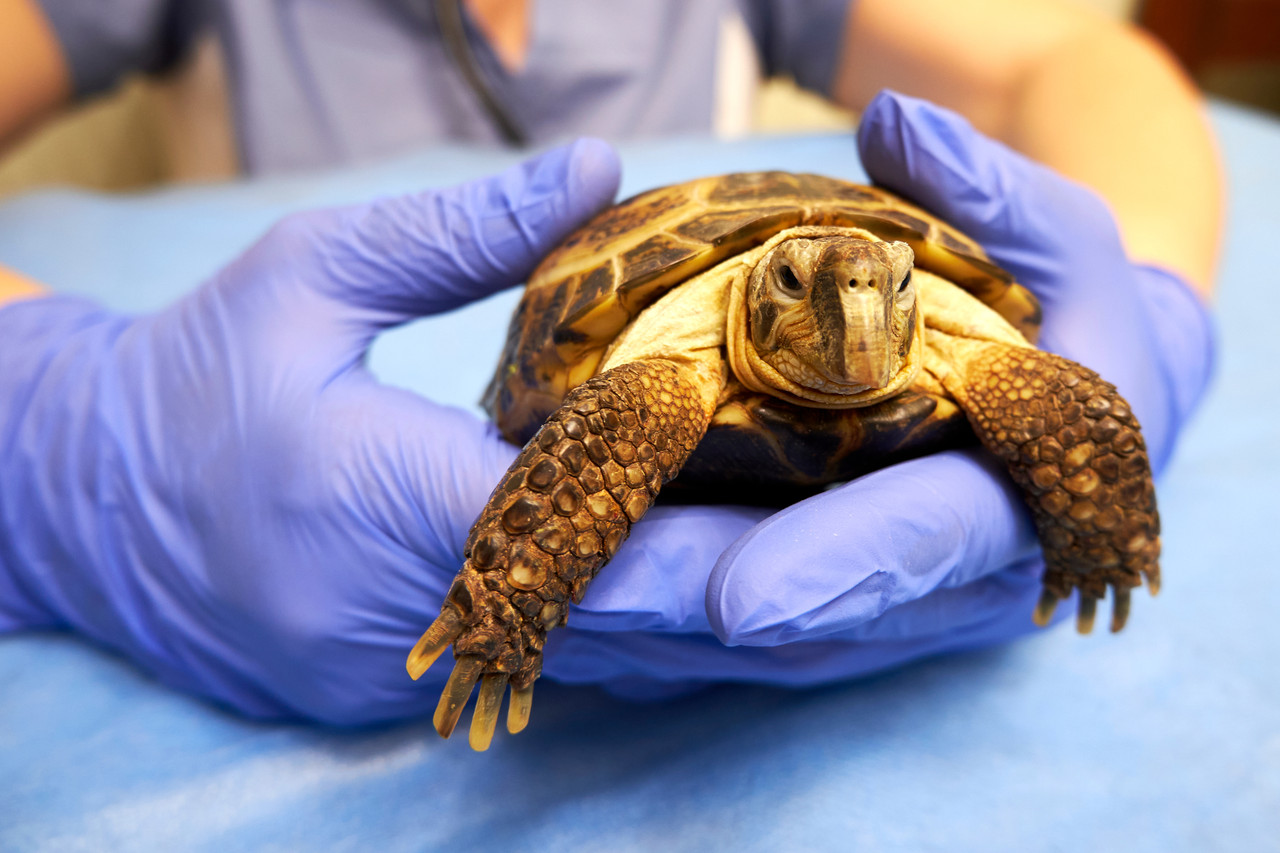
The Russian tortoise (Testudo horsfieldii) is the most common pet tortoise in the United States — and for good reason. Small enough to be practical, hardy enough to forgive beginner mistakes, and friendly enough to recognize its keeper, the species fits backyard reptile keeping better than almost any other tortoise. But "hardy" does not mean "low-maintenance," misinformation about lighting, diet, and enclosure setup remains one of the leading causes of preventable health problems.
This is the complete Russian tortoise care guide: enclosure setup, diet, lighting, temperature, humidity, brumation, and the common health issues every new keeper should know about.
Russian Tortoise Basics
-
- Native range: Steppes of Russia, Iran, Afghanistan, Kazakhstan, Uzbekistan, Pakistan
- Adult size: 5 – 8 inches (males slightly smaller than females)
- Adult weight: 250 – 500 grams
- Lifespan: 40 – 50 years (some documented over 100)
- Activity: Diurnal, terrestrial, surprisingly fast burrowers
- Temperament: Personable, recognize keepers, more interactive than most tortoises
Russian tortoises are also called Horsfield's tortoises, Afghan tortoises, or Steppe tortoises. The species is well-suited to arid, semi-desert conditions and brumates naturally during cold months.
Enclosure Setup
This is where most new keepers get the most wrong. A Russian tortoise needs more space than typical pet-store advice suggests.
Indoor enclosure
-
- Minimum size for one adult: 4 ft x 2 ft (8 sq ft) — larger is better
- For two adults: 6 ft x 3 ft minimum
- Style: Open-top tortoise table is strongly preferred over glass tanks. Glass enclosures cause stress (tortoises do not understand transparent barriers and pace the perimeter constantly)
- Substrate: A 50/50 mix of organic topsoil and play sand, 4 – 6 inches deep to allow burrowing. Coconut coir works but holds humidity higher than ideal for this species
Outdoor enclosure
If your climate allows (USDA zones 6 and warmer, with proper protection), an outdoor pen for at least part of the year is hugely beneficial:
-
- Walls: 12 – 18 inches tall and buried 8 – 12 inches deep (Russian tortoises dig)
- Substrate: Natural soil with grass and weeds for grazing
- Cover: Hide boxes, partial shade, and a secure top to prevent predator access
- Drainage: Slope slightly so puddles do not form
Lighting and Temperature
The single most important husbandry input. Russian tortoises are full-spectrum sun animals and the lighting setup is non-negotiable.
UVB lighting
-
- Type: Linear T5 HO 10 – 12% UVB bulb (Arcadia Desert 12 or Zoo Med ReptiSun T5 10.0)
- Length: Roughly the full length of the enclosure
- Distance: 12 – 18 inches above the tortoise's back
- Replacement: Every 12 months (UVB output drops well before the bulb stops producing visible light)
Heat
-
- Basking spot: 95 – 100°F (measured at the tortoise's shell, not the substrate)
- Cool side: 70 – 75°F
- Night drop: 60 – 70°F is fine; no nighttime heat needed unless the room drops below 60°F
- Heat source: A halogen flood bulb works better than a ceramic heat emitter — tortoises need the visible-light cue to bask properly
Humidity
Low. This is the surprise for keepers coming from tropical reptiles. Russian tortoises evolved in arid steppe — target 30 – 50% humidity. Russian tortoises thrive in relatively dry, well-ventilated conditions. Constantly damp substrate or poor ventilation can increase the risk of respiratory disease and shell problems.
The exception is hatchlings, which need slightly higher humidity (50 – 60%) and a moist hide.
Diet: The Grazing Reptile
Russian tortoises are obligate herbivores — and not just any plant matter. They evolved on a high-fiber, low-protein, low-sugar diet of steppe weeds and grasses. Get the diet wrong and you produce a pyramided, overweight, sickly tortoise.
Daily diet (80% of intake)
-
- Dark leafy greens: collard, mustard, turnip, dandelion, escarole, endive
- Edible weeds: plantain, mallow, hibiscus leaves, clover, dandelion (leaves and flowers)
- Grasses: orchard grass, timothy hay, Bermuda hay (especially important)
Occasional (15%)
-
- Squash, pumpkin, sweet potato: small amounts, twice a week
- Cactus pads (de-spined): excellent
- Edible flowers: roses, nasturtiums, pansies
Rare (5% or less)
-
- Fruit: A few times a month maximum. Russian tortoises are not fruit-eaters in the wild and high sugar causes gut flora imbalance
- Commercial tortoise pellets: Mazuri Tortoise LS as occasional supplement, not daily
Foods to avoid completely
-
- Iceberg lettuce (nutritionally empty)
- Spinach, kale, beet greens in excess (oxalates bind calcium)
- Cabbage, broccoli regularly (goitrogens)
- Dog food, cat food, or any animal protein (causes shell pyramiding and kidney damage)
- Avocado, rhubarb leaves, citrus (toxic)
Provide a cuttlebone in the enclosure for free-choice calcium. Dust greens with plain calcium powder (without D3) twice weekly for adults, three times weekly for growing juveniles.
Water
Provide a shallow water dish large enough to soak in. Russian tortoises drink readily and benefit from a weekly 15-minute soak in shallow lukewarm water (no deeper than the bridge between carapace and plastron). Soaking aids hydration, gut motility, and shell health.
Brumation
Russian tortoises naturally brumate (the reptile equivalent of hibernation) for 3 – 5 months in the wild. Captive brumation is optional but reduces health complications associated with year-round activity in older animals.
Should you brumate?
-
- Yes, if: Tortoise is over 3 years old, weight is healthy, no recent illness, you have a suitable cool space (40 – 50°F, consistent)
- No, if: Tortoise is under 3 years, underweight, recovering from illness, or you cannot maintain stable temperatures
If brumating, fast the tortoise for two weeks before, then transition to a 40 – 50°F space (an unheated garage or a controlled refrigerator works) for 8 – 16 weeks. Check weekly for weight loss; healthy brumation results in <10% body weight loss. For full brumation protocols, the Tortoise Trust and ARAV publish detailed guidelines.
Common Health Problems
-
- Respiratory infection: Often from cool, damp conditions. Symptoms include nasal discharge, mouth breathing, bubbles. Requires vet treatment.
- Pyramiding: Raised, pyramid-shaped scutes caused by excess protein, low humidity in hatchlings, and inadequate calcium-to-phosphorus ratios. Largely preventable through diet.
- Metabolic bone disease (MBD): Soft shell, weak limbs, deformity. Caused by inadequate UVB, calcium, or D3.
- Bladder stones: From low hydration and high-protein diet. Prevented by regular soaking and proper diet.
- Parasites: Particularly in wild-caught animals. Wild-caught Russians are still imported — always buy captive-bred or get a fecal exam in the first month.
- Beak overgrowth: Caused by insufficiently rough food. Cuttlebone and high-fiber grazing usually prevent this.
Captive-Bred vs. Wild-Caught
This is critical. A large percentage of Russian tortoises sold in pet stores in the United States are still wild-caught, despite improvements in captive breeding. Wild-caught animals:
-
- Carry heavier parasite loads
- Are usually dehydrated and stressed on arrival
- Have higher first-year mortality
Whenever possible, source from a captive breeder who provides documentation. Expect to pay $150 – $300 for a captive-bred hatchling; wild-caught animals often sell for less but cost more in vet bills.
Handling and Socialization
Russian tortoises tolerate handling better than most tortoises, but they are still tortoises brief, gentle, support-the-shell handling only. Tortoises do not enjoy being held in the way mammals do; what looks like calm is often resignation. Outdoor supervised time in the pen is far more enriching than indoor handling.
For authoritative care references, the American Tortoise Rescue and Tortoise Trust publish detailed, species-specific guides.
Frequently Asked Questions
What do Russian tortoises eat? Dark leafy greens, edible weeds (dandelion, plantain, mallow), grasses, and occasional squash. No fruit beyond a rare treat, no animal protein.
How big do Russian tortoises get? 5 – 8 inches, 250 – 500 grams as adults.
Do Russian tortoises hibernate? They brumate (reptile hibernation) for 3 – 5 months in the wild. Captive brumation is optional and recommended for healthy adult animals.
How long do Russian tortoises live? 40 – 50 years on average, with documented cases over 100 years. A lifetime commitment.
Can Russian tortoises live together? Two males will fight. Two females can sometimes cohabitate in large enclosures with multiple hides. Male/female pairs work but the male will harass the female constantly; she needs hiding space.
Bottom Line
Russian tortoises are one of the best beginner tortoises in the United States, but "beginner" does not mean low-effort. Get the enclosure size right, the UVB right, the diet weed-and-grass heavy, and the humidity low. Brumate healthy adults seasonally. Source captive-bred whenever possible. Do those five things and you have a 40-year companion that recognizes you and runs to the food dish at breakfast.
For more detailed reptile care references, see the Fluker Farms Reptile U care sheet library backed by 70+ years of experience raising reptiles and their feeders in Louisiana.