
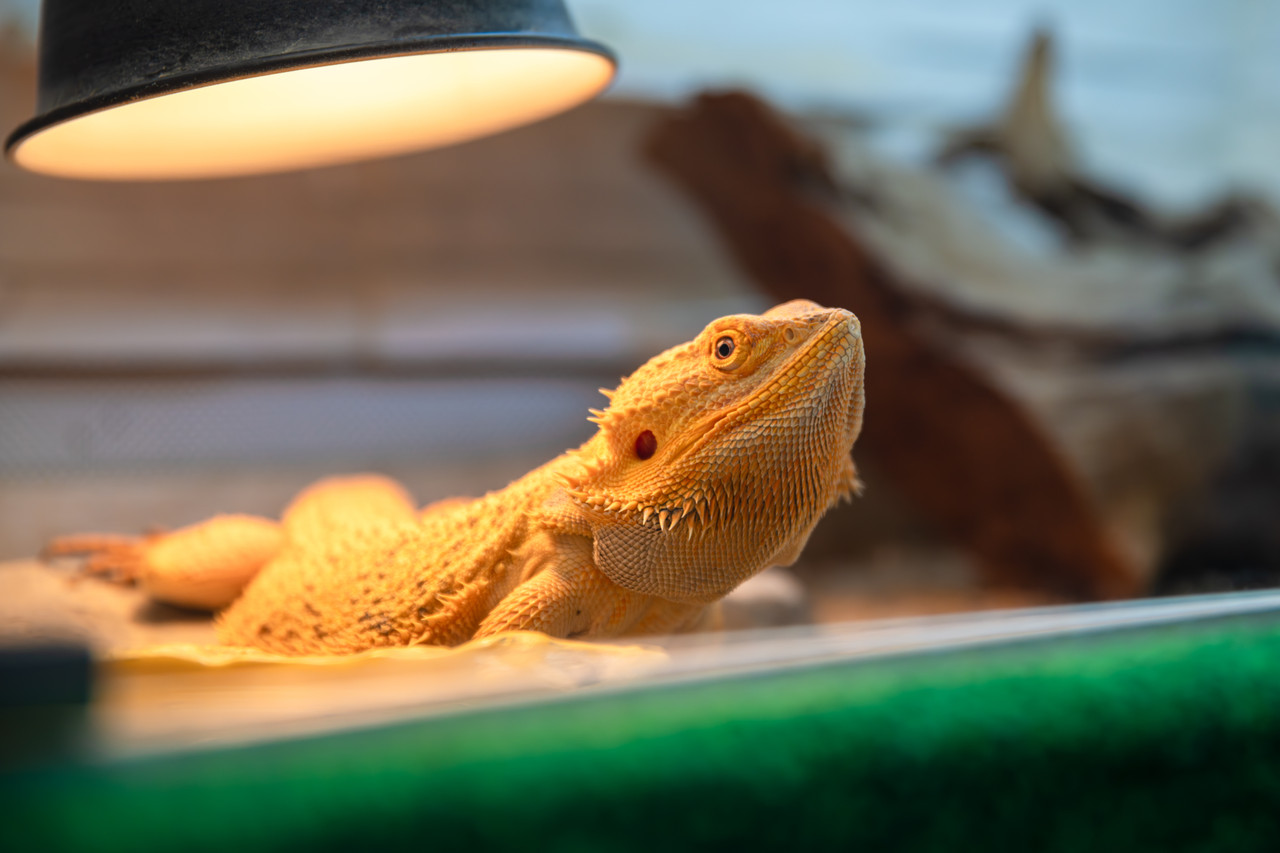
Bearded Dragon Enclosure Size: A Guide by Age, From Hatchling to Adult
Posted by Fluker's Team on Oct 30th 2026
One of the most common bearded dragon mistakes is buying a single tank meant to last a lifetime, when in reality bearded dragons grow fast and their enclosure size needs to keep pace. A hatchling that fits comfortably in a 20 gallon tank can triple in length within months, and by adulthood most bearded dragons need considerably more floor space than older care advice suggests.
Why Floor Space Matters More Than Tank Volume
Bearded dragons are ground-dwelling baskers, not climbers, so horizontal floor space for movement, thermoregulation, and exercise matters far more than overall gallon volume. A tall, narrow tank with the same gallon rating as a long, low one is not an ideal choice for a bearded dragon, since it doesn't give the animal room to move between a hot basking area and a cooler retreat.
Enclosure Size by Age
|
Age |
Minimum Size |
Notes |
|
Hatchling (0-3 months) |
20-40 gallon tank or tub |
Smaller spaces can make it easier for tiny hatchlings to find food and feel secure, but expect to upgrade quickly |
|
Juvenile (3-12 months) |
40 gallon breeder (36"x18"x18") |
Growth is rapid at this stage; don't delay upgrading |
|
Adult (12+ months) |
4ft x 2ft x 2ft (roughly 120 gallon equivalent) |
Widely considered a practical minimum by current keeper and veterinary guidance; larger is always better |
Many experienced keepers now skip the smaller juvenile-stage tanks altogether and start with a 4x2x2 enclosure from the start once a dragon is past the hatchling stage, since it saves the cost and effort of multiple upgrades and gives even a young dragon room to grow into.
Why Bigger Is Better for Adult Bearded Dragons
A 4x2x2 setup isn't an arbitrary number, it's roughly the minimum space needed to create a genuine thermal gradient, with a proper basking zone in the 95-110°F range and a cooler retreat around 85°F, plus room for climbing branches, hides, and substrate for natural digging behavior. Undersized enclosures make it much harder to maintain this gradient accurately, which can contribute to stress and health problems over time. Reptile husbandry guidance summarized by the Merck Veterinary Manual consistently emphasizes that adequate space to support behavioral needs and thermoregulation is a core welfare requirement for captive reptiles, not just a comfort upgrade.
Signs Your Bearded Dragon's Enclosure Is Too Small
-
- Glass surfing or persistent pacing along the walls
- Difficulty maintaining a clear temperature gradient between basking and cool zones
- Limited room for a properly sized UVB fixture to cover the basking area adequately
- Visible stress behaviors like darkened beard or reduced appetite without another clear cause
Enclosure Style Options
Glass terrariums, PVC enclosures, and screen cages (in warm, humid climates only) can all work for bearded dragons, provided they hit the size minimums above. PVC and glass generally hold heat and humidity more predictably than screen, which matters most in drier or more variable indoor climates.
FAQ
1. Can I keep a bearded dragon in a 20 gallon tank as an adult?
No. A 20 gallon tank is only appropriate for hatchlings and is far too small for an adult bearded dragon, which needs roughly 4 feet of length at minimum.
2. Do I need to upgrade the enclosure gradually as my dragon grows?
You can, but many keepers find it more cost-effective to move directly to an adult-sized enclosure once a dragon outgrows the hatchling stage, rather than buying multiple interim tanks.
3. Is bigger than 4x2x2 ever a problem for bearded dragons?
Generally no, as long as basking and cooler zones are properly maintained across the larger space. Very young hatchlings are the main exception, since an overly large space can occasionally make it harder for them to find food.
4. What should go inside a properly sized enclosure?
A sturdy basking branch or platform, hides on both the warm and cool ends, a shallow water dish, and appropriate substrate, along with a basking light and UVB fixture sized to the enclosure.
The Bottom Line
Sizing up early saves money, reduces stress on your dragon, and sets up a stable thermal gradient from the start. For full setup and diet guidance, see our complete bearded dragon care guide, and stock up on live crickets and dubia roaches to keep a growing dragon well fed.