
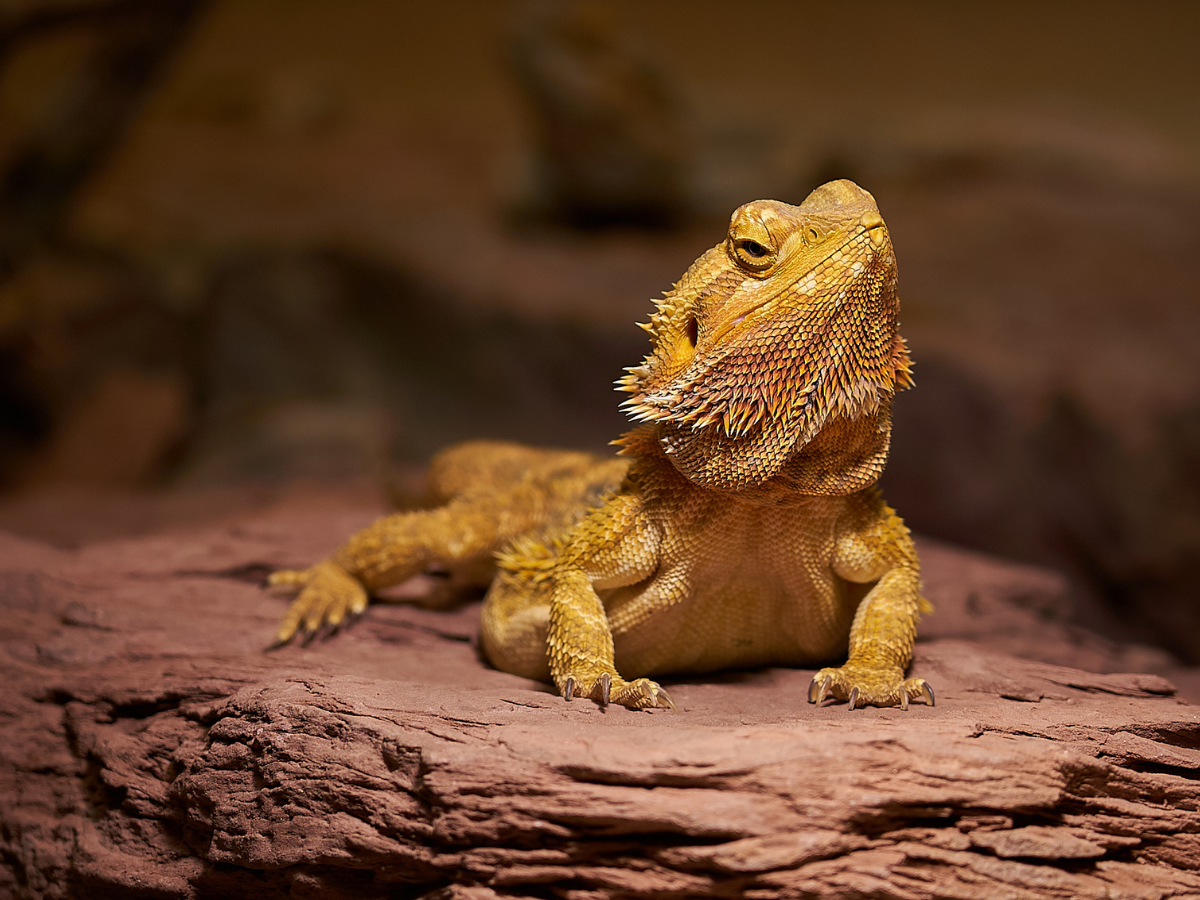
Bearded Dragon Care: The Complete Beginner's Guide to a Healthy, Thriving Dragon
Posted by The Fluker's Team on Aug 14th 2026
Bearded dragon care is what makes the difference between a dragon that merely survives and one that thrives for a decade or more. Bearded dragons (Pogona vitticeps) are among the best beginner reptiles because they are docile, active during the day, and full of personality, but they have specific needs for heat, lighting, and diet that beginners often get wrong. This complete care guide walks through enclosure setup, UVB and temperature, diet by age, humidity, handling, and the common health problems to watch for, so you can give your dragon a strong start.
About Bearded Dragons
Native to the arid woodlands and deserts of Australia, bearded dragons are diurnal, semi-arboreal lizards that bask by day and shelter at night. Adults reach 18 to 24 inches from nose to tail and commonly live 8 to 12 years with good care, sometimes longer. They are omnivores, eating both insects and plants, with the balance shifting as they age. Their hardiness and calm temperament are exactly why they are so popular, but those same traits can mask husbandry problems until they become serious.
Enclosure and Tank Size
Bearded dragons are active lizards that benefit from having enough space to move, explore, bask, and regulate their body temperature. While a hatchling can be housed temporarily in a smaller enclosure, planning for an adult-size habitat from the beginning can save money and reduce the stress of upgrading later.
- Hatchlings: Smaller enclosures can be used temporarily, but they should provide enough room for a distinct basking area, cool area, and space to move freely. If possible, starting with an adult-size enclosure allows the habitat to grow with the animal.
- Adult bearded dragon: A minimum enclosure size of 75 to 120 gallons (4ft x 2ft x 2ft) is a good starting point for an adult. Larger enclosures are even better and provide more room for enrichment and a proper temperature gradient.
- Style: a front-opening terrarium is ideal for access and reduces stress compared with reaching down from above.
Provide a sturdy basking platform on the warm end, along with hides and climbing opportunities throughout the enclosure. Avoid sharp or unstable decorations that could injure the dragon.
For substrate, tile, slate, or another solid, easily cleaned surface is a straightforward choice for beginners. Loose substrates can be used successfully with appropriate husbandry, but they require greater attention to cleanliness, hydration, and feeding practices.
Heating and Temperature
Bearded dragons are heat-loving desert reptiles, and proper temperatures drive their digestion and immune function. Create a thermal gradient so the dragon can self-regulate.
- Basking spot: 95 to 110 degrees Fahrenheit for adults; juveniles can take the warmer end, around 100 to 110.
- Cool side: 75 to 85 degrees Fahrenheit.
- Nighttime: can safely drop to the low 70s or even high 60s; no colored night bulbs are needed.
Use a quality halogen or incandescent basking bulb and always measure temperatures with a digital probe thermometer at the basking surface, not a stick-on dial. Avoid heat rocks, which can burn the belly.
UVB Lighting
UVB is not optional. Without adequate UVB exposure, bearded dragons cannot synthesize sufficient vitamin D3 and are at increased risk of calcium deficiency and metabolic bone disease. Use a high-output linear (tube) UVB bulb, such as a T5 high-output 10.0 / desert-strength lamp, running across about two-thirds of the enclosure length. Mount it so the dragon can bask within the manufacturer's recommended distance, and replace UVB bulbs every 6 to 12 months because output fades long before the bulb stops emitting visible light. Provide a 12-to-14-hour day and a dark night.
Bearded Dragon Diet by Age
Diet shifts dramatically as a dragon grows, and getting the ratio right is central to good care.
- Juveniles (under about 12 months): roughly 70 to 80 percent insects and 20 to 30 percent vegetables. Growing dragons need protein and should be fed insects multiple times a day, as much as they eat in 10 to 15 minutes.
- Adults: the ratio flips to roughly 70 to 80 percent vegetables and 20 to 30 percent insects, with insects offered a few times a week. This shift helps prevent obesity, a common problem in adult dragons.
Staple insects include crickets, dubia roaches, and other appropriately sized feeders. Treats like hornworms add hydration and variety, and dubia roaches and crickets make excellent staples. Always gut-load feeders and dust them with calcium.
Vegetables should center on leafy greens like collard greens, mustard greens, turnip greens, and dandelion greens, plus squash and bell pepper. Avoid spinach and beet greens in excess (they bind calcium), and never rely on iceberg lettuce, which is nutritionally empty. Fruit should be an occasional treat only.
Sizing rule: never feed any insect wider than the space between the dragon's eyes to prevent impaction.
Supplements
Calcium supplementation is commonly used with feeder insects, but the exact frequency depends on the dragon's age, diet, UVB exposure, and the supplement being used. Follow the supplement manufacturer's instructions or a reptile veterinarian's recommendation. Add a reptile multivitamin once or twice a week. This supplementation, combined with proper UVB, is the foundation of preventing metabolic bone disease, as emphasized in standard veterinary references like the Merck Veterinary Manual.
Humidity and Water
Bearded dragons come from a dry climate. Keep the enclosure well ventilated and avoid persistently damp conditions. A typical household humidity level is generally appropriate 30 to 40 percent humidity. Excess humidity can lead to respiratory infections. Provide a shallow water dish (though many dragons prefer to hydrate from food and the occasional bath), and offer a 10-to-15-minute lukewarm bath once or twice a week, which aids hydration and shedding.
Handling and Behavior
Bearded dragons generally tolerate handling well, which is part of their appeal. Support the body fully, keep early sessions short, and let a new dragon settle in for a week or two before regular handling. Common behaviors include arm-waving (a submissive gesture), beard-puffing and darkening (a display, sometimes stress or territorial), and head-bobbing. Understanding these signals helps you read your dragon's mood and health.
Common Health Issues to Watch
- Metabolic bone disease: caused by inadequate UVB or calcium; signs include soft jaw, tremors, and weak limbs. Often preventable with appropriate UVB, calcium, diet, and overall husbandry.
- Impaction: often from loose substrate or oversized prey; signs include lethargy and not passing stool.
- Respiratory infection: from cold or humid conditions; signs include open-mouth breathing, mucus, and lethargy.
- Parasites: common in new or wild-caught animals; a vet fecal exam is wise for new dragons.
- Obesity: from too many insects or fatty feeders in adults.
Any persistent lethargy, refusal to eat, or visible deformity warrants a visit to a reptile-experienced veterinarian.
FAQ
What size tank does a bearded dragon need?
Adults need at least a 40-gallon breeder, but a 75-to-120-gallon enclosure (about 4 feet long) is strongly preferred. Bigger is better for these active lizards.
Do bearded dragons need UVB lighting?
Yes, absolutely. Without UVB they cannot absorb calcium and will develop metabolic bone disease. Use a high-output linear UVB bulb and replace it every 6 to 12 months.
What do bearded dragons eat?
Juveniles eat mostly insects (crickets, dubia roaches) with some greens; adults eat mostly leafy greens with insects a few times a week. Gut-load and calcium-dust all feeders, and size prey to the space between the eyes.
What temperature should a bearded dragon's tank be?
A basking spot of 95 to 110 degrees Fahrenheit and a cool side of 75 to 85, with a natural nighttime drop into the low 70s. Always measure with a digital probe thermometer.
How long do bearded dragons live?
With proper care, commonly 8 to 12 years, and sometimes longer. Good husbandry, especially UVB, diet, and temperature, is the biggest factor in longevity.
The Bottom Line
Bearded dragon care comes down to a few non-negotiables: a large enough enclosure, a proper basking gradient, real UVB, an age-appropriate diet, and correct calcium supplementation. Get those right and you will have a hardy, interactive companion for many years. Stock your dragon's diet with Fluker Farms' dubia roaches, live crickets, and hornworms, and explore our other reptile care resources for more practical husbandry guidance. Fluker Farms has been serving the reptile community since 1956.