
Bearded Dragon Shedding: What's Normal, What's Stuck, and How to Help
Posted by Fluker's Team on Nov 13th 2026
One week your bearded dragon is bright as a penny; the next it's dull, gray, patchy, cranky, and rubbing its face on everything it can find. Welcome to bearded dragon shedding.
Shedding is one of the most normal processes in reptile keeping, but it can still make a new keeper nervous. Here's what shedding looks like, what behavior changes are normal, how you can help, and when a shed actually becomes a problem.
How Bearded Dragons Shed
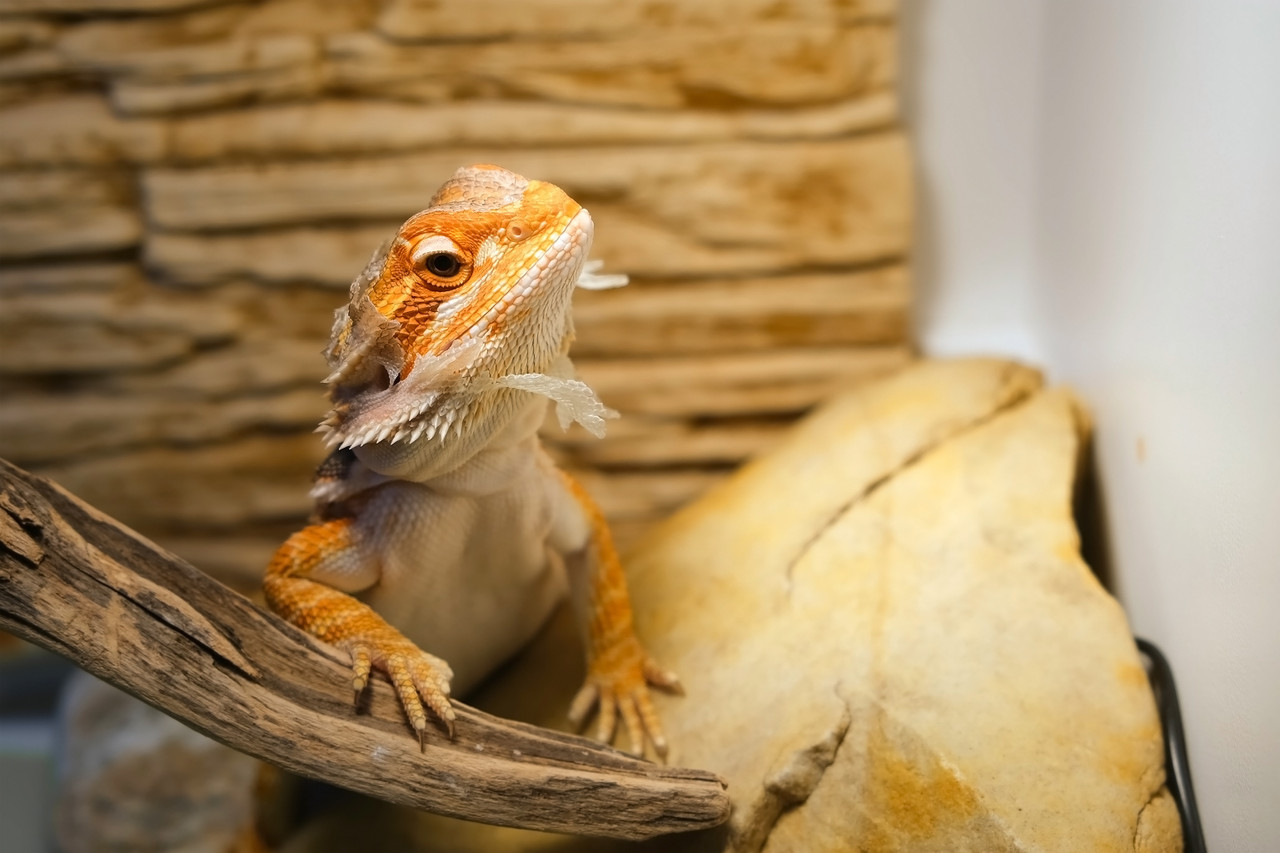
Unlike snakes, which peel off in one dramatic sock, bearded dragons shed in patches. You may see a leg shed one week, the tail next, the head after that.
A new skin layer forms beneath the old one. As the new skin develops, the old layer separates and eventually flakes away. That dull, gray, or almost papery appearance is one of the first obvious signs that a shed is underway.
Frequency is all about growth rate:
-
- Hatchlings and juveniles (0–12 months): At this age they are growing so quickly you may see them shed weekly.
- Subadults (12–18 months): Shedding generally becomes less frequent as their growth begins to slow. So you may see a shed roughly every month or two.
- Adults: Adults may shed only a few times a year, and its often in patches.
There is a lot of individual variation, so there isnt a set shedding schedule that every dragon will follow. But one note is that if your juvinile dragon is not shedding often it may require a wellness vet visit to make sure everything is right.
Normal Shedding Behavior (Don't Panic List)
A bearded dragon can act a little different while it's shedding. You may notice:
-
- Reduced appetite for a few days
- More hiding than usual
- Increased scratching or rubbing against branches and decor
- More reluctance to be handled
- Duller coloration
- Irritability or general restlessness
You may also see your dragon puffing or bulging its eyes during a head shed. This can look alarming, but occasional eye bulging is a behavior bearded dragons use while loosening skin around their eyes.
Most of these changes should resolve as the shed progresses. The important thing is to look at the overall picture. A dragon that is eating a little less and rubbing against its enclosure during a shed is very different from one that remains lethargic, refuses food for an extended period, or shows other signs of illness.
How to Help (and What Never to Do)
For most healthy bearded dragons, shedding is something they can handle on their own. Your job is mainly to provide appropriate husbandry and avoid interfering with the process.
Do:
-
- Keep humidity in range (30–40%) Bearded dragons come from arid environments, so their enclosure shouldn't be kept constantly humid. Follow the humidity range recommended for your enclosure and provide access to fresh water.
- Offer a warm bath (85–90°F, shallow) once or twice during a shed; many dragons visibly loosen up afterward.
- Provide textured surfaces—Branches, rocks, slate, and other safe enclosure furnishings give your dragon places to rub against when loose skin starts bothering them
- Feed hydrating prey. Moisture status drives shed quality more than any other nutritional factor, and juicy feeders like hornworms are the tastiest hydration you can offer a dragon in shed.
Never:
-
- Pull skin that isn't ready. Peeling off attached shed tears the new skin underneath, causing wounds and scarring. If it doesn't come away with a gentle brush of the finger, it stays.
- Use shedding aids on the face and eyes without vet guidance.
- Ignore it entirely. A hands-off shed is usually fine, but retained shed in specific spots (below) causes real damage.
Stuck Shed: When Shedding Becomes a Problem
Most sheds come and go without causing any problems. Retained shed, sometimes called dysecdysis, is more concerning when it remains tightly wrapped around areas such as the toes, tail tip, or around the eyes.
A ring of retained skin around a toe or the end of the tail can become increasingly tight as the skin dries. In severe cases, restricted blood flow can damage the tissue.
Check the toes and tail during and after a shed. If you notice a tight band of retained skin, don't pull it off. A warm, shallow soak may help soften loose material, but persistent retained shed should be evaluated by a reptile veterinarian.
A darkened or swollen toe or tail tip, significant swelling, bleeding, or retained material around the eye warrants prompt veterinary attention.
The Association of Reptile and Amphibian Veterinarians maintains a directory of reptile veterinarians, and the Merck Veterinary Manual provides veterinary information on reptile skin and shedding problems.
If your bearded dragon repeatedly has difficulty shedding, look at the bigger picture as well. Review enclosure temperatures, humidity, UVB, hydration, nutrition, and overall husbandry rather than treating every difficult shed as an isolated problem.
FAQ
1. Can I feed my bearded dragon during a shed?
Yes, offer normally and don't stress if intake drops for a few days. Hydrating feeders like hornworms often stay appealing when everything else gets refused.
2. Do bearded dragons eat their shed?
Some do, it's natural (nutrient recycling and instinctive tidiness) and harmless, if slightly gross to watch.
3. Why does my dragon's shed look stuck for weeks?
Patch shedding means weeks-long sheds are normal, especially in adults. The concern isn't duration — it's constriction on toes and tail, and anything around the eyes.
4. Should I mist my bearded dragon daily during shed?
A light misting during shed is fine; soggy enclosures are not. Target 30–40% humidity with brief shed-time bumps, chronic high humidity invites respiratory trouble in desert species.
The Bottom Line
Bearded dragon shedding is patchy, itchy, appetite-dampening, and normal. Your job is small: keep humidity and hydration right, provide rough decor and the occasional bath, check toes and tail after each shed, and keep your hands off skin that isn't ready. The dragon will handle the rest.
Help the process along with hydrating live hornworms from Fluker's, and find full husbandry guides at Reptile U — trusted since 1956.