
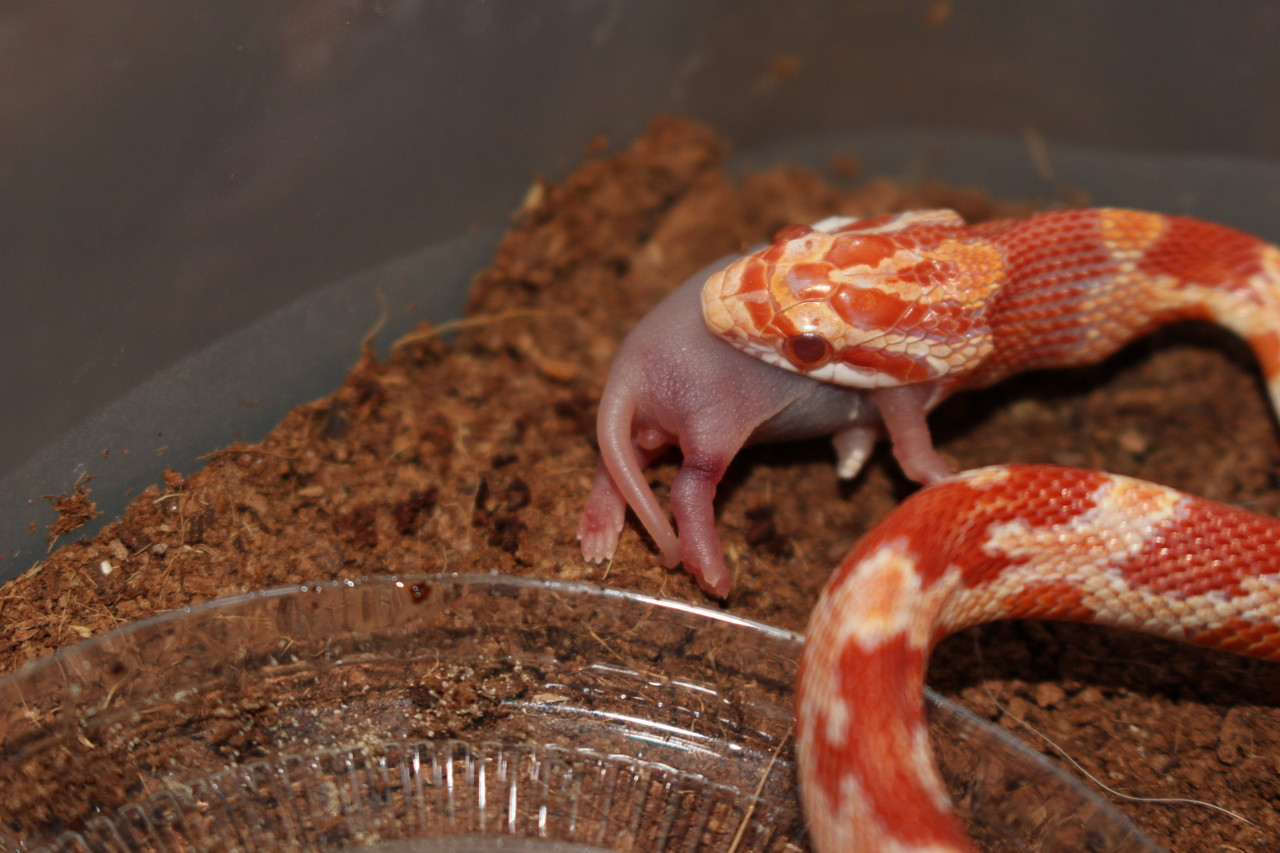
Corn Snake Feeding: What to Feed, How Much, and How Often
Posted by Fluker's Team on Nov 11th 2026
Corn snakes are one of the best beginner snakes in the hobby. They are hardy, even-tempered, and refreshingly simple to feed. Still, getting feeding right is the single biggest factor in keeping a corn snake healthy for its 15-to-20-year lifespan. This guide covers exactly what corn snakes eat, how to size prey, how often to feed at each life stage, and how to handle the occasional feeding hiccup.
What Corn Snakes Eat
Corn snakes (Pantherophis guttatus) are carnivores that eat whole prey. In captivity that means rodents, mice and, for larger adults, small rats. Whole prey is nutritionally complete for snakes, providing everything they need in one meal, so there is no need for supplements or variety the way there is with insectivorous reptiles.
In the wild, corn snakes are opportunistic and also take birds, lizards, and other small animals, but captive corn snakes thrive on a straightforward rodent diet.
Sizing the Prey Correctly
Proper prey size is the most important feeding rule. The guideline used by keepers and reptile veterinarians is that the prey should be roughly the same width as the widest part of the snake's body, or no more than about 1.5 times that width. A correctly sized meal leaves a small, gentle bulge in the snake after eating.
Prey that is too large can cause regurgitation or stress, while prey that is too small simply means the snake needs to eat more often. As your corn snake grows, you step up through rodent sizes: pinky mice for hatchlings, then fuzzies, hoppers, and on up to adult mice for grown snakes.
How Often to Feed
Feeding frequency depends on age and size, because young, growing snakes need more frequent meals than adults.
Hatchlings and young juveniles should be fed every 5 to 7 days. Older juveniles and sub-adults do well on a meal every 7 to 10 days. Adult corn snakes need feeding only every 10 to 14 days. Overfeeding, feeding too often or prey that is too large, is a common mistake that leads to obesity, so it is better to err toward the longer intervals once a snake is grown.
Frozen-Thawed vs. Live Prey
Frozen-thawed rodents are the recommended choice for several reasons. They are safer, because a live rodent can bite and seriously injure a snake, sometimes fatally. They are more convenient, since you can buy and store them in bulk. And they are more humane. Most corn snakes readily accept frozen-thawed prey.
To prepare frozen prey, thaw it fully in the refrigerator or a sealed bag in warm water and then warm it to a lifelike temperature before offering. Snakes detect heat, so a warm meal is far more enticing. Never microwave prey, and never feed prey that is still cold in the center.
Feeding Technique
Offer the prey with feeding tongs rather than your hand, both for safety and to keep your snake from associating your hand with food. Many keepers wiggle the warmed prey gently to mimic live movement, which triggers the strike. Feed in the snake's enclosure (the old advice to feed in a separate container is now considered unnecessary and stressful by many keepers). After eating, leave the snake undisturbed for 24 to 48 hours, since handling too soon can cause regurgitation.
Solving Common Feeding Problems
Corn snakes occasionally refuse a meal, and the usual causes are easy to address. A snake in shed (cloudy, bluish eyes) will often skip food until the shed is complete simply try again in a few days. Temperatures that are too low can suppress appetite, so confirm the warm side sits around 85 degrees Fahrenheit. Stress from a new home or frequent handling can also cause refusals; give a new snake a week or two to settle before expecting reliable feeding. If a corn snake refuses repeatedly and loses body condition, or regurgitates meals, consult a reptile-experienced veterinarian, as the Merck Veterinary Manual and reptile vets advise.
Frequently Asked Questions
1. What do corn snakes eat?
Corn snakes eat whole rodents mice and, for large adults, small rats. Whole prey is nutritionally complete, so no supplements are needed.
2. How often should I feed my corn snake?
Hatchlings every 5 to 7 days, juveniles every 7 to 10 days, and adults every 10 to 14 days. Adults are easy to overfeed, so longer intervals are safer.
3. What size mouse should I feed my corn snake?
Choose prey about as wide as the widest part of your snake's body, up to roughly 1.5 times that width. It should leave only a small bulge.
4. Should I feed live or frozen mice?
Frozen-thawed is recommended as it is safer for the snake, more convenient, and more humane. Thaw fully and warm before offering.
5. Why won't my corn snake eat?
Common reasons include being in shed, temperatures that are too cool, or stress from a new environment. Address those first; if refusal persists with weight loss, see a reptile vet.
The Bottom Line
Feeding a corn snake is about as simple as snake care gets: appropriately sized frozen-thawed rodents, offered every 5 to 14 days depending on age, warmed and presented with tongs. Avoid overfeeding adults, give the snake quiet time after meals, and troubleshoot refusals by checking shed status and temperatures first.
Starting out with a corn snake? Explore the Fluker Farms reptile care sheets and reptile shop for the gear and guidance to keep your snake thriving.