
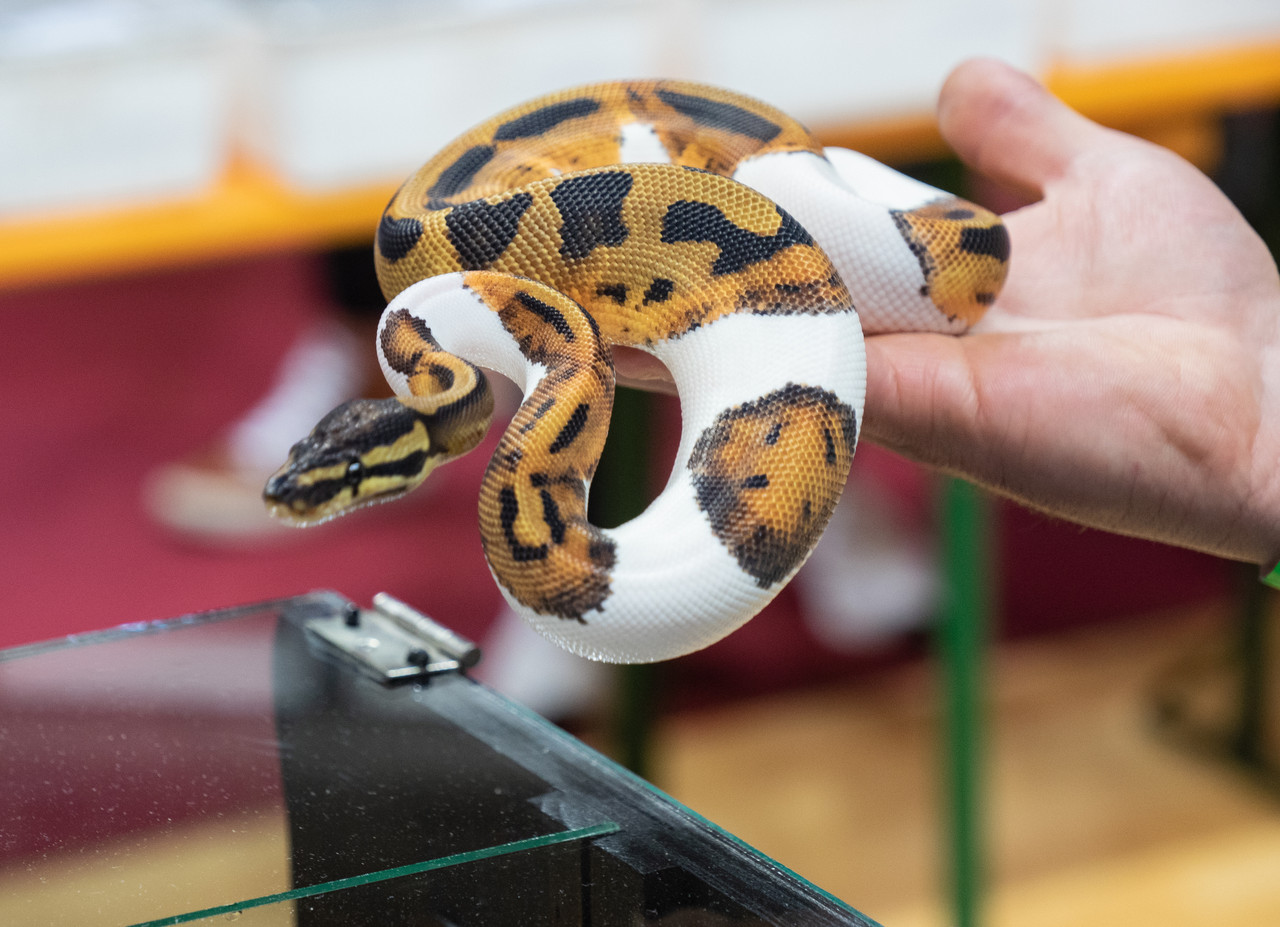
Ball Python Care: The Complete Beginner's Guide to a Healthy, Happy Snake
Posted by The Fluker's Team on Oct 29th 2026
The ball python, Python regius, is the most popular pet snake in the world, and for good reason. They are docile, manageably sized, long-lived, and undemanding once their enclosure is set up correctly. If you are considering your first snake (or want to make sure you are caring for yours properly) this complete ball python care guide covers housing, heat, humidity, feeding, handling, and the health issues to watch for.
Ball Python Basics
Native to the grasslands and forests of West and Central Africa, ball pythons get their name from their habit of curling into a tight ball when stressed.They are are on the smaller side of the python species, where females typically reach 3-5 feet and males are a bit smaller. With good care they commonly live 20 to 30 years, and some exceed that, so a ball python is a genuine long-term commitment.
Ball Pythons are nocturnal, ground-dwelling ambush predators, which shapes nearly every aspect of their care: they want a secure, warm, humid enclosure with places to hide.
Enclosure and Size
A hatchling can start in a smaller enclosure, but an adult ball python needs an enclosure of at least 40 gallon. A 4-foot-long enclosure (roughly 120 gallons) is a better long-term home that lets the snake stretch out fully. Despite their reputation for liking tight spaces, modern care standards favor giving ball pythons room to move, with plenty of clutter and hides to make that space feel secure.
Key enclosure features include a secure, locking lid since ball pythons are strong and persistent escape artists and at least two hides, one on the warm side and one on the cool side, so the snake never has to choose between feeling secure and thermoregulating. Add branches, plants, and clutter to provide cover and enrichment.
Substrate
Good substrate choices hold humidity and let the snake burrow a little. Cypress mulch, coconut husk, and orchid bark all work well. Avoid pine and cedar shavings, which may give off oils that are harmful to snakes, and avoid sand as it can cause impaction and does not suit a humidity-loving species.
Temperature and Heat
Ball pythons are ectotherms and need a thermal gradient so they can move between warm and cool zones. Provide a warm side with a basking surface temperature around 88 to 92 degrees Fahrenheit and a cooler side around 75 to 80 degrees.However, a nighttime drop into the low 70s is fine.
Use a thermostat-controlled heat source such as an under-tank heater or a radiant heat panel, and always measure temperatures with a probe thermometer at the substrate level, not a stick-on dial. A thermostat is not optional; unregulated heat mats can cause serious burns. While ball pythons do not strictly require UVB the way diurnal lizards do, low-level UVB lighting on a day-night cycle is increasingly recommended as beneficial.
Humidity
Humidity is where many beginners struggle. Ball pythons need ambient humidity around 55 to 65 percent, rising to 70 percent or higher during a shed. Too low and you get incomplete sheds and respiratory stress; too high and persistently wet, and you risk scale rot and respiratory infection.
Maintain humidity with a moisture-retaining substrate, a large water bowl, partial cover over a screen top, and occasional misting. A humid hide, a hide box filled with damp sphagnum moss, gives the snake a place to boost humidity on demand, especially around shedding and monitor with a digital hygrometer.
Feeding Your Ball Python
Ball pythons are carnivores that eat whole prey. The most common being appropriately sized rodents. The feeder should be no wider than the widest part of the snake's body. Hatchlings can eat a small mouse or rat pup; while adults take an appropriately sized rat.
Feed hatchlings and juveniles about every 5 to 7 days, and adults every 7 to 14 days. Frozen-thawed prey is strongly preferred over live due to it being safer, more humane and much more convenient. Thaw prey thoroughly and warm it to a lifelike temperature before offering.
Ball pythons are famous for going off food, sometimes for weeks or months, especially in the cooler months or during breeding season. As long as the snake maintains good body condition and the husbandry is correct, a fast is usually not cause for alarm. Though persistent refusal alongside weight loss warrants a check of temperatures, humidity, and a vet visit.
Handling and Temperament
Ball pythons are among the most docile snakes, which is a big part of their popularity. Give a new snake a week or two to settle in and start eating reliably before handling. Then handle gently and regularly, a few times a week for short sessions, to keep the snake accustomed to you. Support the body fully, avoid handling right after a meal (wait 48 hours to prevent regurgitation), and never handle a snake that is in shed or showing signs of stress.
Common Health Issues
Most ball python health problems trace back to husbandry. Respiratory infections, signaled by wheezing, open-mouth breathing, or bubbling mucus, often stem from temperatures that are too low or humidity that is wrong. Retained shed, especially over the eyes (retained eye caps) or tail tip, points to insufficient humidity. Scale rot and skin infections come from substrates that are too wet and dirty. Mites are a common parasite that appear as tiny moving dots on the snake or in the water bowl. Per the Merck Veterinary Manual and reptile veterinary guidance, any sign of illness should prompt a visit to a reptile-experienced veterinarian, and many problems resolve once husbandry is corrected.
Frequently Asked Questions
Are ball pythons good for beginners?
Yes. Their docile temperament, manageable size, and straightforward care make them one of the best beginner snakes, provided you can maintain correct heat and humidity.
How big do ball pythons get?
Females typically reach 3 to 5 feet and males a bit smaller. They are a relatively small python.
How often do ball pythons eat?
Hatchlings and juveniles eat about every 5 to 7 days; adults every 7 to 14 days. They commonly refuse food for periods, which is usually normal if body condition holds.
Do ball pythons need UVB?
They do not strictly require it like diurnal lizards, but low-level UVB on a day-night cycle is increasingly recommended as beneficial for their overall health.
Why won't my ball python eat?
Fasting is common, especially in cooler months or breeding seasons. Check that temperatures and humidity are correct and that prey size and presentation are right. Persistent refusal with weight loss warrants a vet visit.
How long do ball pythons live?
Commonly 20 to 30 years in captivity, sometimes longer, a long-term commitment.
The Bottom Line
Ball pythons are popular for a reason: they are gentle, hardy, and long-lived. The keys to success are a properly sized and secure enclosure, a correct thermal gradient set with a thermostat, well-managed humidity, appropriately sized frozen-thawed prey on a sensible schedule, and gentle regular handling. Get the husbandry right and a ball python is one of the most rewarding reptiles you can keep.